|
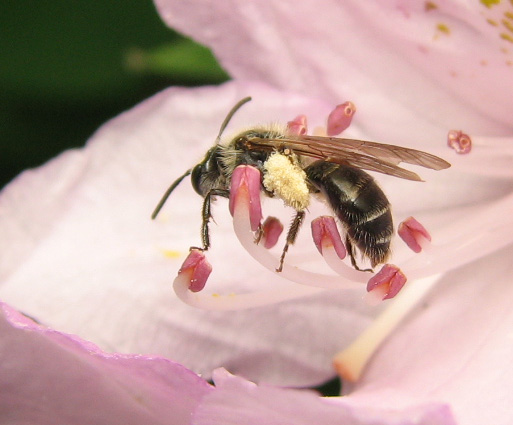
| Spring beauty bee © Beatriz Moisset |
It is common practice for nature centers to have a beehive.
Often, a glass wall allows observation of the colony's busy life, seldom failing
to catch the eye of visitors. This serves an educational purpose by providing a
great opportunity for a behind-the-scenes peek at the private lives of honey
bees. Thus, visitors learn about these useful insects and their role as crop
pollinators.
 |
| Honey bee © Beatriz Moisset |
Sometimes I wonder if we are delivering the right message.
The purpose of nature centers is to protect natural wildlife and to promote
conservation of natural resources. This is clearly stated in many of their
mission statements. Honey bees and chickens are domestic animals. They are both
important to agriculture. However, we don't keep chickens at the bird feeders
to teach about birds. Do we need honey bees to teach about insects?
Nowadays, agriculture relies heavily on honey bees; however,
we must bear in mind that honey bees were
introduced to this continent by Europeans
a few hundred years ago. Until then, all pollination was accomplished by native
pollinators, more than
4,000 species of bees and many other insects, such as
flies, moths, wasps and even beetles, as well as some birds and bats.
 |
| Jack-in-the-pulpit © Beatriz Moisset |
 |
| Fungus gnats © Beatriz Moisset | |
|
|
Native plants didn't need honey
bees then, and they don't need them now. A few examples should suffice. In
early spring a number of delicate little flowers carpet the forest floor. They
are in a rush to take advantage of the sunlight during the absence of foliage
and don’t last long. Thus, they are called "spring ephemerals." None
of them is visited by honey bees. In fact, many resort to highly specialized
pollinators which have been around for as long as the plants themselves. Skunk
cabbage and
Jack-in-the-pulpit are pollinated by flies. Spring beauties and
trout lilies are visited by an assortment of bees and bumble bees; but get
help, in particular, from their own specialized pollinators, the so called
spring beauty bee and the trout lily bee respectively.
 |
| Azalea bee © Beatriz Moisset |
Shortly after, when azaleas bloom
another set of specialists comes into service, the
buzz pollinators. These are
experts at shaking the pollen out of the flower stamens. One of these experts
is the azalea Andrena bee. Its name needs no explanation.
So, what are honey bees doing in
the meantime? They devote their time to the nectar and pollen of willows and
maples. Thus, honey bees make use of these trees, but the trees themselves
benefit from an abundance of native pollinators and don't need the extra help.
Honey bees also gather pollen from hazelnuts. This is good for the bees but doesn't
help the trees in the slightest because they are wind-pollinated.
 |
| Magnolia and mordellid beetles © Beatriz Moisset |
Honey bees don't pollinate azaleas
or rhododendrons. They also ignore dogwoods. As for
magnolias and their close
relatives, tulip trees, these plants are primarily pollinated by beetles and
flies, all of them native. Honey bees are more inclined to visit generalist flowers,
the ones receptive to a wide range of pollinators. Therefore, native
pollinators are all that the flowers need.
Another problem with honey bees in
natural areas is that they may contribute to the spread of non-native plants by
pollinating them preferentially. They also may compete with native pollinators
for floral resources.
 |
| Tricolored bumble bee © Beatriz Moisset |
In summary, native plants and
native pollinators are members of a complex community. They have adapted to
each other and work well together. Honey bees, while important to agriculture, are
not needed in natural areas. The only justification for keeping beehives at
nature centers is to use them as a gate to the understanding and
familiarization with insects and their usefulness. If the visitor leaves the
nature center as ignorant of native pollinators as he was when he came in, then
the center has failed to deliver the most valuable message of the bees.
It is imperative that naturalists
and educators at nature centers with beehives devote time to informing the
public about native pollinators and their significance to native plants. Posters
with this information would also be helpful.
 |
| Augochlora pura © Beatriz Moisset |
"There is an essential piece missing from the typical
presentation about pollination in many nature centers, that is the discussion
of native pollinators and their essential continuing role in native and not so
native ecosystems. Each presentation about honey bees should be accompanied by
a hands-on activity to plant native plants that are partners to native
pollinators, or the construction of simple solitary bee houses from dry bamboo
canes or wood blocks. We would make progress if our children earned great
take-home's like solitary bee bundles in place of coloring-in honey bee
illustrations; and, planting native seeds to grow purple coneflower or other
natives in place of marigolds, etc. A little effort and a subtle change in
emphasis would shift attention to native pollinators."
© Beatriz Moisset. 2013